Graduate students in the School of Communication Sciences and Disorders are supporting older adults facing early cognitive decline while gaining hands-on clinical experience through a unique partnership with the Brain Wellness Group at the University Carillon Church in Oviedo. For the last four years, students and faculty clinicians have provided speech-language pathology services to seniors participating in the program, which is open to the community and focuses on the health and well-being of individuals experiencing memory loss, mild cognitive impairment or early-stage dementia.
Students working under the supervision of faculty clinicians earn clinical hours by conducting cognitive and hearing screenings to clients while supporting them on their mission to live as independently as possible.

“The UCF students come here to learn how to work with this population as they develop their clinical skills to be used in the field,” says Julie Matura, an associate instructor and the program coordinator. “I really want the students to understand that a diagnosis is simply a diagnosis, and we’re here to identify what is affecting the individual in their day-to-day life.”
The communication sciences and disorders master’s degree requires a minimum of 72 credit hours, including 25 credit hours of clinical practice, which is the equivalent of 400 supervised hours.
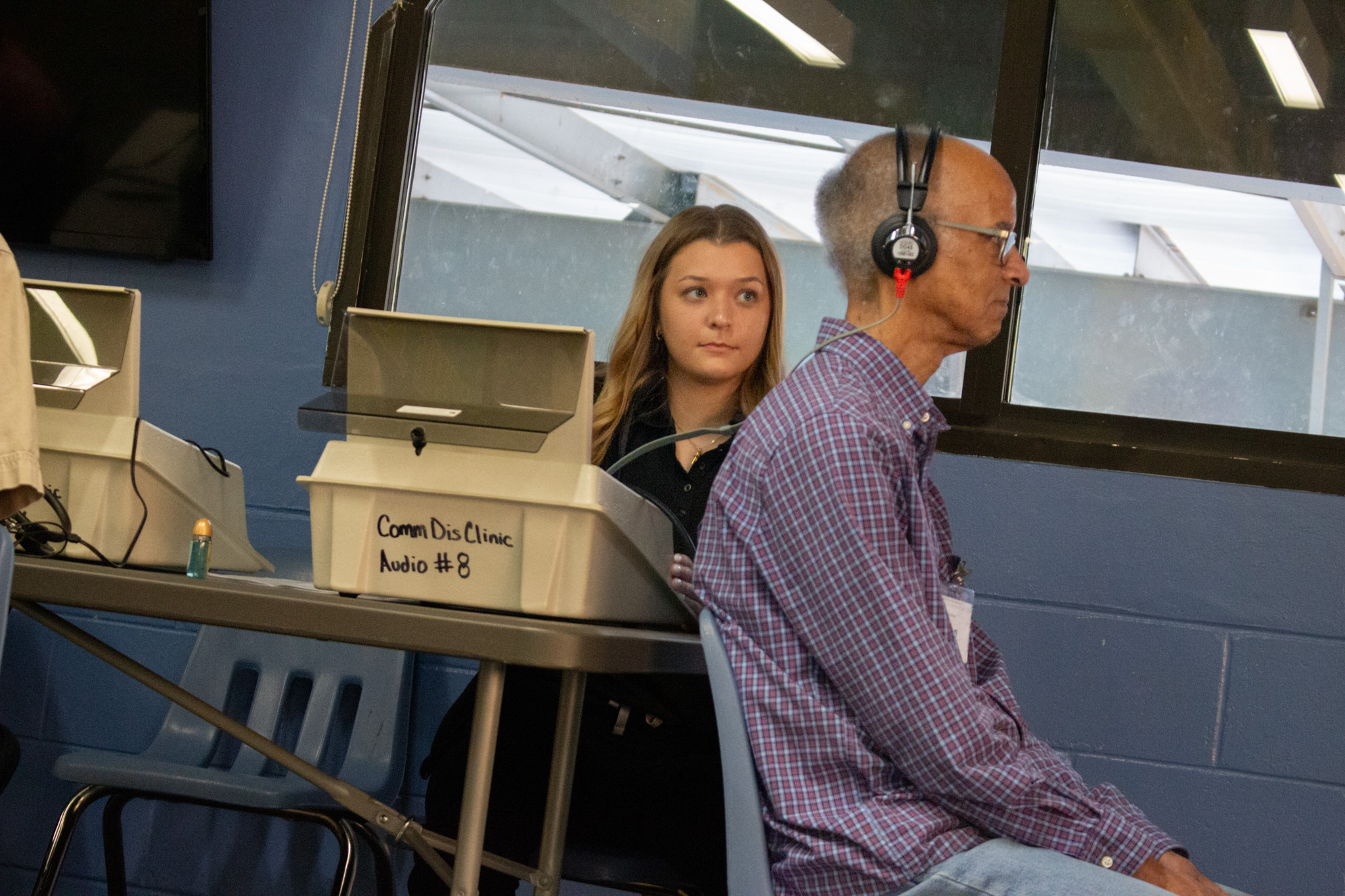
Students assisting with the Brain Wellness Group perform initial hearing and cognitive tests and then conduct therapy sessions with the clients throughout the semester to help them build memory skills and strategies that they can use at home
“The students develop individual and personalized plans for the clients with a goal of helping them find new ways to enjoy their life and engage in the activities most important to them,” Matura says. “Not all types of dementia are the same, and no two journeys follow the same timeline. The diagnosis is challenging not only for the individual, but for the entire family as they learn to navigate an uncertain path together.”
Student Nicole Velez served with the program in Spring 2026 and says that these skills and strategies vary from patient to patient. For example, one patient may benefit from challenging their recall by doing crossword puzzles, while another may practice developing new ways to help keep their lives more organized by learning to use a new grocery app. These types of activities help exercise the patient’s memory, while allowing them to socialize and build communication skills that may not be easily accessible at home, says Velez.
“It’s incredible how certain things work for certain people,” says Velez. “They all want to learn new things. They all want to learn new strategies. It is a diagnosis that’s going to, unfortunately, keep getting worse, but it’s how far we can extend our functionality and our independence for them.”
In addition to developing activities for clients to help keep their brains active, students perform hearing screenings to provide an assessment of hearing health.
“The auditory system is the gateway that opens up communication for everybody,” Associate Lecturer and Audiologist Janel Cosby says. “When an individual has hearing loss, there is evidence that the longer it goes untreated, the higher the risk is for mild cognitive decline or dementia,”
Participants who are identified through the screenings as having hearing loss are referred to the UCF Health Communications Disorders Clinic for a full diagnostic evaluation.
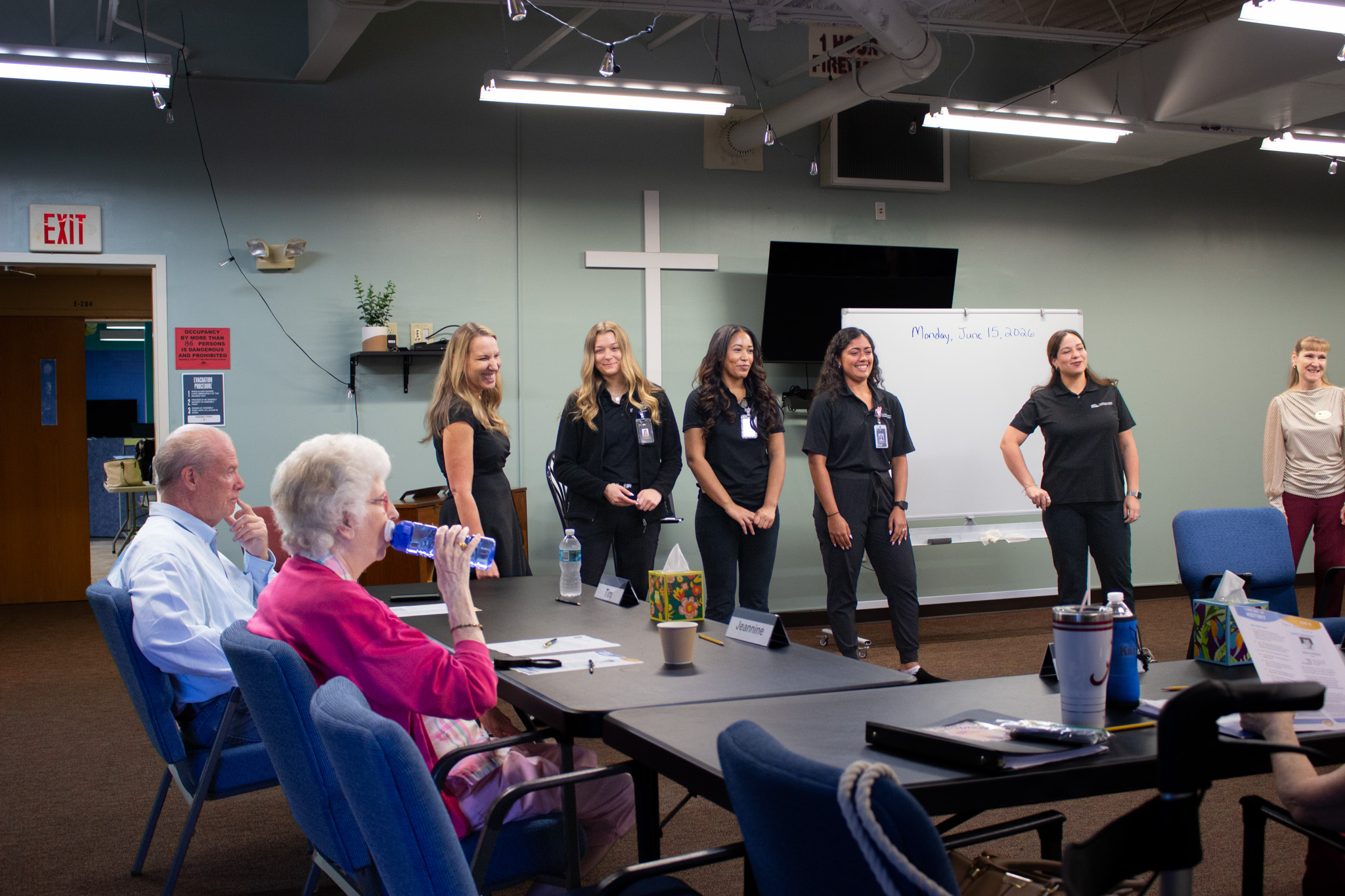
“I love working with the students in the community as well as in the clinic,” Cosby says. “They have the opportunity to see a person in a more natural environment and interact with them and help them. I want the students to really have a full appreciation of communication sciences and disorders.”
“From the student perspective, there are many preconceived ideas about what a dementia diagnosis means, but when they spend time with these individuals, they begin to see the person beyond the diagnosis,” says Matura. “They discover that the focused goals and support they provide can make a meaningful difference.”
More information about participating in The Brain Wellness Group at the University Carillon Church can be found here.
To schedule hearing services, contact the UCF Health Communication Disorders Clinic.