The speech-language pathology graduate program in the UCF School of Communication Sciences and Disorders has achieved its highest ranking in program history, earning a tie for the No. 40 spot in the 2026 U.S. News & World Report Best Graduate Schools rankings. The program climbed eight spots from last year’s ranking, placing it in the top 14% of programs in the nation.
“What sets us apart is the creative and advanced technology we tap into in our teaching, training and research,” says Professor and School Director Ann Eddins. “We are creating dynamic learning environments where students can build confidence, refine their skills, and prepare for the real-world challenges they will face as clinicians.”
The Master of Communication Sciences and Disorders at UCF is one of the largest in the nation and the top supplier of speech-language pathologists in Florida.
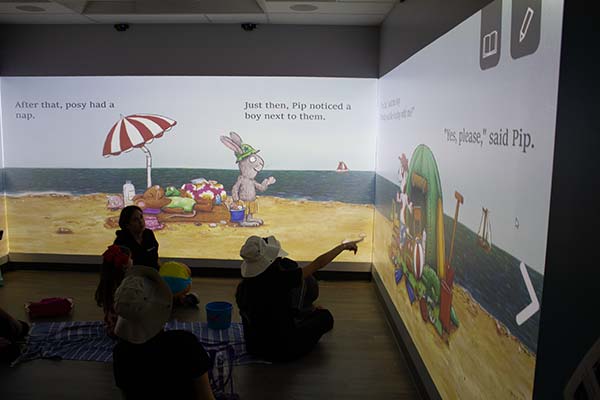
A key driver of the program’s success is its use of cutting-edge simulation technology made accessible for teaching, research and community programs through the College of Health Professions and Sciences’ Rehabilitation Innovation Center. Students can learn in spaces like the Blended Learning Interactive Simulation Suite, an immersive, mixed reality environment featuring 270-degree, floor-to-ceiling touchscreen walls that bring clinical scenarios to life. Speech-language pathology students help struggling young readers improve their literacy skills in innovative learning experiences such as iREAD, an intensive reading program, where story books are transformed into interactive environments. They can also participate in creative simulations like a phonetics-based escape room that challenges students to apply their knowledge of the International Phonetic Alphabet in real time.
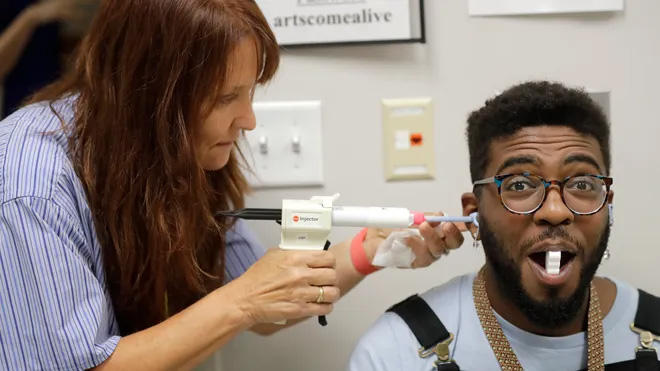
The program also offers unique and specialized training opportunities, including a Dysphagia Training and Simulation Day that provides hands-on experience with swallowing disorders in simulated medical settings. Students gain exposure to the complexities of care delivery and develop the clinical reasoning skills needed to treat patients with feeding and swallowing challenges.
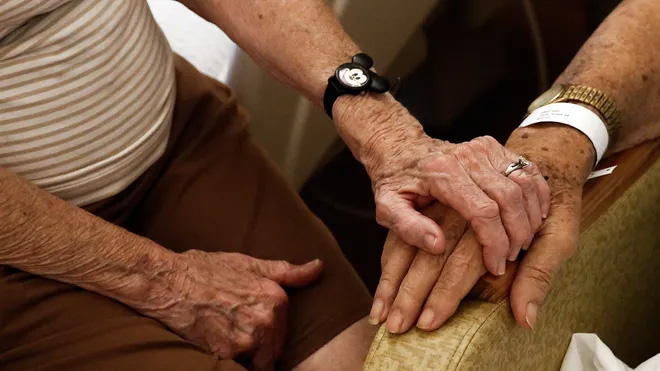
Students further expand their skillsets through the Rehabilitation Innovation Center’s role as a testbed for AgeTech Collaborative from AARP, gaining hands-on experience with emerging assistive technologies designed to improve quality of life for senior populations. Students also train at the Florida Alliance for Assistive Services and Technology (FAAST) Center, where they support individuals in need of assistive devices while contributing to research and innovation.
“We are constantly evolving to meet the needs of the communities we serve,” Eddins says. “By integrating emerging technologies, interprofessional collaboration, and experiential learning into our curriculum, we are preparing graduates who are adaptable, forward-thinking, and ready to lead in a rapidly changing healthcare landscape.”
Clinical education remains a cornerstone of the program. Students have access to more than 200 internship affiliations throughout Central Florida and collectively provide approximately 12,000 hours of speech, language, and hearing services to the greater Orlando community each year. In addition to external placements, students gain experience through UCF’s on-campus clinical sites, including the Communication Disorders Clinic, which serves individuals across the lifespan, and the Aphasia House, an intensive treatment program that is among only a few of its kind in the nation.
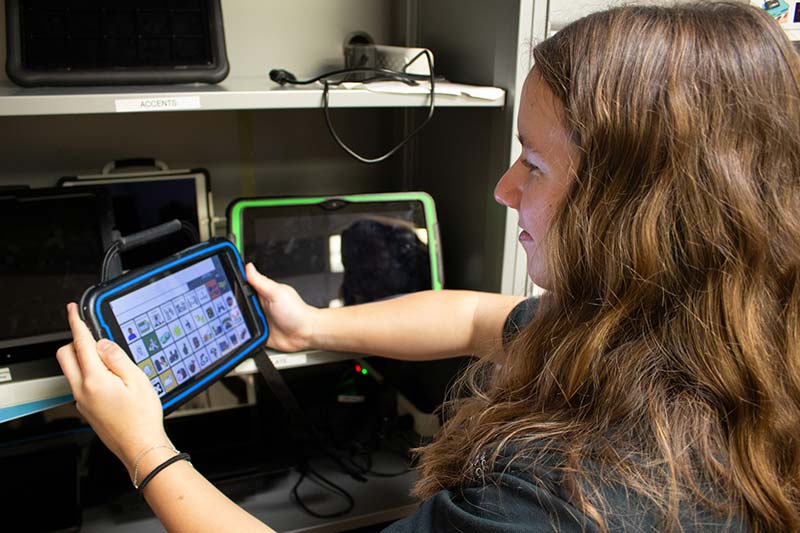
These clinical experiences are further enriched through interprofessional collaboration, with students working alongside peers in physical therapy and social work to deliver comprehensive, patient-centered care.
“The learning and experiences students gain here is truly remarkable,” says Eddins. “They graduate not just workforce ready, but at the forefront of innovation in healthcare.”
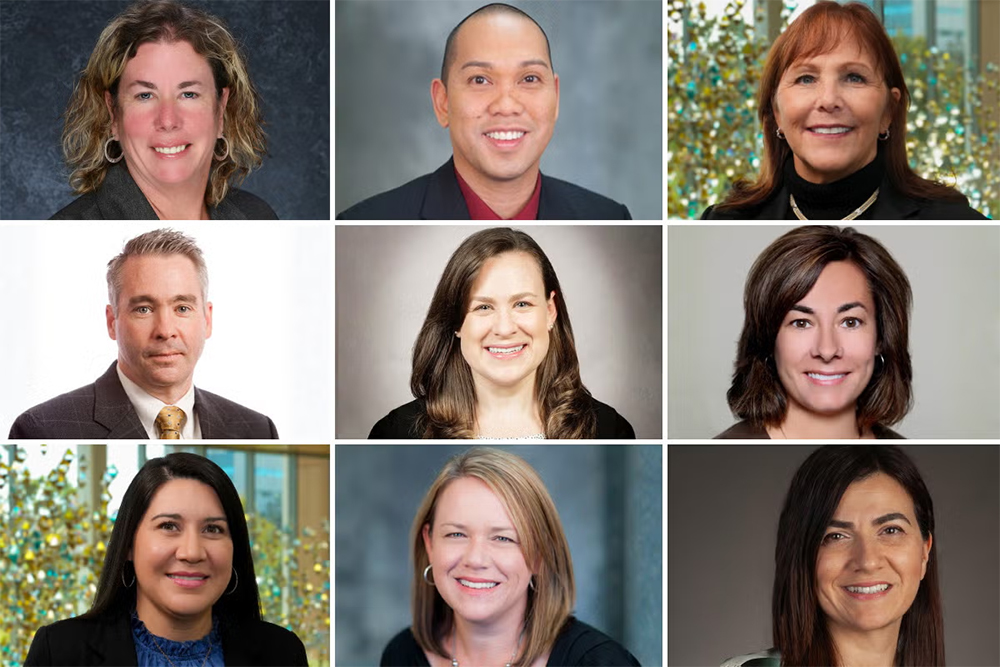
The program’s strength is also rooted in its accomplished faculty. The School of Communication Sciences and Disorders is home to more than 40 faculty members, including researchers, clinical educators, and innovators dedicated to advancing the field. Five faculty members are Fellows of the American Speech-Language-Hearing Association — one of the highest honors in the profession — while six are Fellows of the National Academies of Practice, recognized for their leadership in interprofessional healthcare and systems-level impact. Faculty lead more than a dozen research labs and centers focused on areas such as augmentative and alternative communication, aphasia and recovery, early language and literacy, health communication, and voice and auditory technologies.
“These growing collective contributions are building an even richer training environment for our students,” Eddins says. “Our faculty are not only advancing research and clinical practice but also mentoring the next generation of clinicians to think critically, innovate boldly, and make meaningful impacts in the lives of their patients.”